
With rich peanut butter filling layered between soft, flaky dough, these peanut butter scones have a perfect balance of crunchy and tender.They’re incredibly easy to make and, with the right technique, you’ll never fail at getting them just right!
Why You‘ll Love This Recipe
I absolutely love scones—they’re simple, foolproof, and you’ll never mess them up. Whether you’re a seasoned baker or just starting out, scones are the perfect treat to make because they’re so forgiving and easy to prepare.
Another reason I adore scones is their incredible versatility.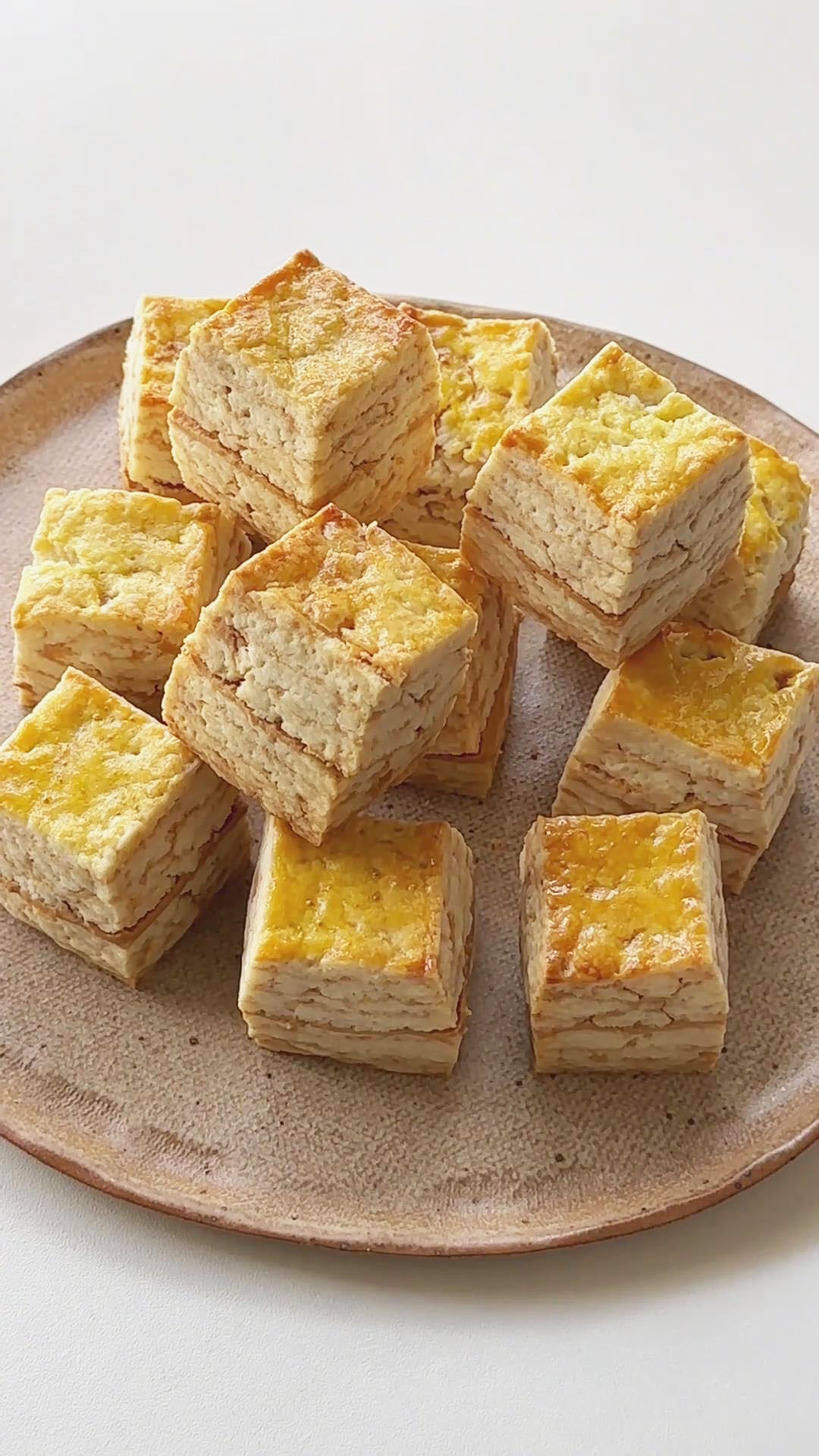
You can make them in so many different flavors, and they always turn out delicious. From sweet to savory, there’s a scone for every mood and occasion.
My whole family loves scones too, and they’re always asking me to bake a fresh batch.
From apple cinnamon scones to Biscoff scones, matcha scones, and cranberry scones, there’s a flavor for everyone.
Today, I’m excited to share my recipe for peanut butter scones.
What makes these peanut butter scones unique compared to others, like cheese scones, is the folding technique that creates beautiful, flaky layers.
This process gives the scones a delicate, buttery texture that practically melts in your mouth. The layers also help trap the rich, nutty flavor of peanut butter, making each bite incredibly satisfying.
For this recipe, I use my homemade peanut butter, which adds an extra layer of freshness and flavor. Homemade peanut butter is easy to make and allows you to control the sweetness and texture, but store-bought works just as well if you’re short on time. Trust me, once you try these scones, they’ll become a family favorite!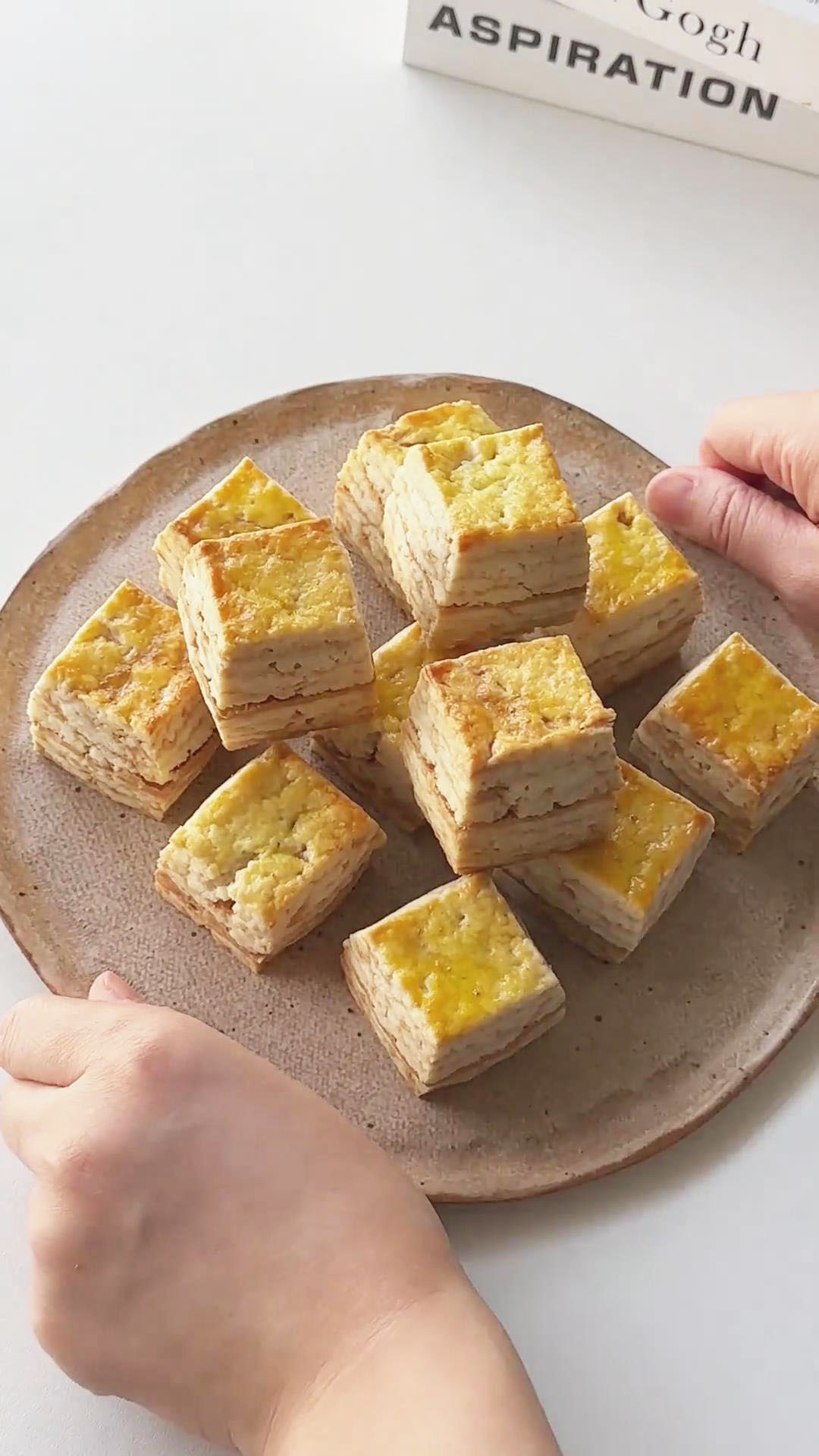

Ingredients
For the scone dough:
- 400g low-protein flour (all-purpose flour)
- 10g baking powder
- 60g granulated sugar
- 2g salt
- 160g unsalted butter
- 100g milk
- 40g heavy cream
For the filling and decoration:
- Peanut butter (to taste): provides a rich, nutty flavor that is the signature filling for the scones.
- Egg yolk wash (to taste): gives the scones a glossy golden finish when baked.
Instructions
Mix dry ingredients: In a large bowl, combine 400g low-protein flour, 10g baking powder, 60g granulated sugar, and 2g salt. Stir well to ensure the dry ingredients are fully incorporated and free from lumps.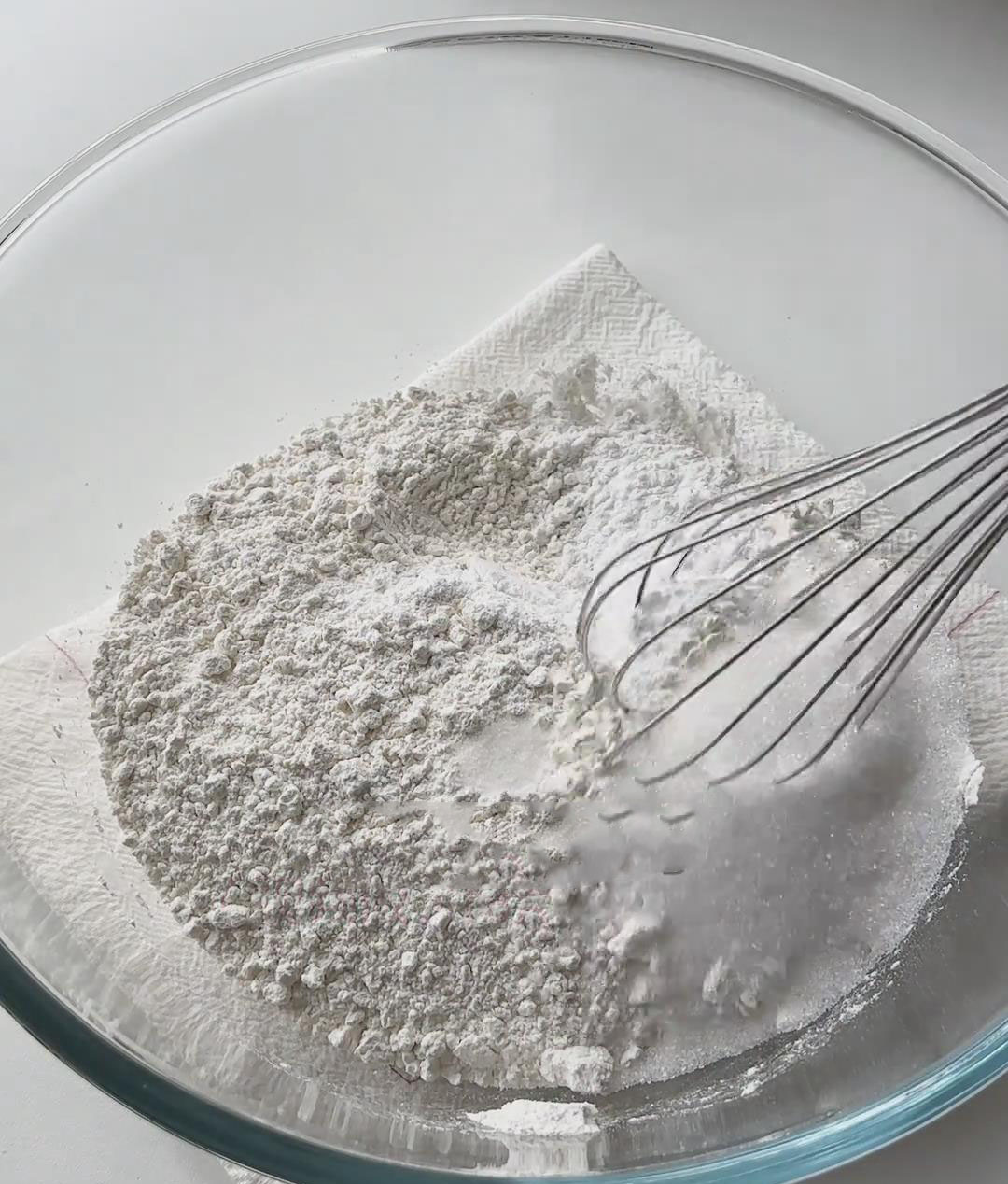
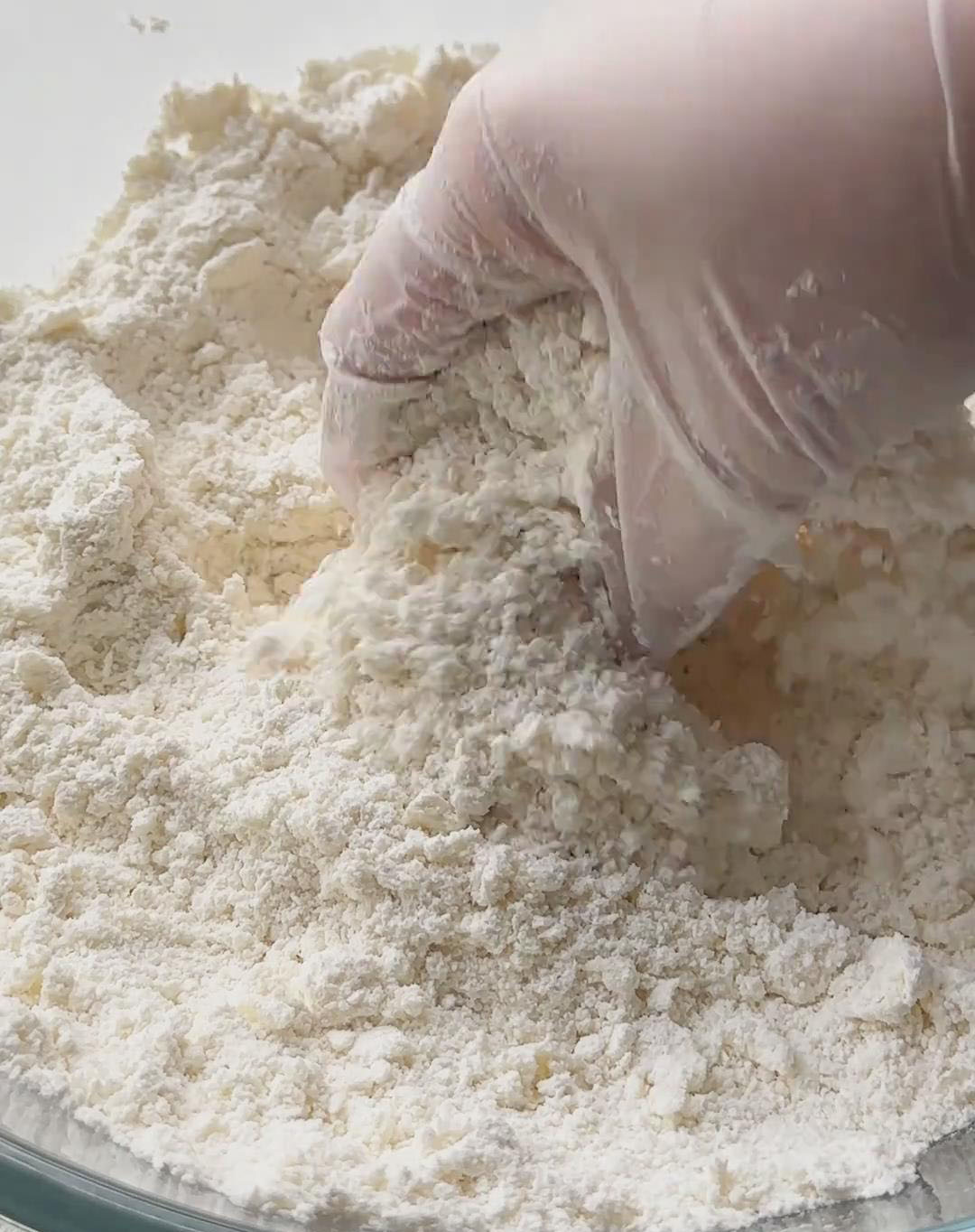
Prepare the butter: Cut 160g unsalted butter into small pieces and add them to the dry ingredients. Wearing gloves, use your hands to rub the butter into the flour mixture until it resembles coarse crumbs. The butter should remain in small chunks—not melted—so the dough has layers and the scones come out flaky.
Make the dough: Add 100g milk and 40g heavy cream to the crumbly mixture. Use a spatula to mix until the dough becomes shaggy. Then, use your hands to knead it lightly, just until it comes together. Be careful not to overwork the dough—once it forms a ball, it’s done. The dough should not have any dry flour remaining.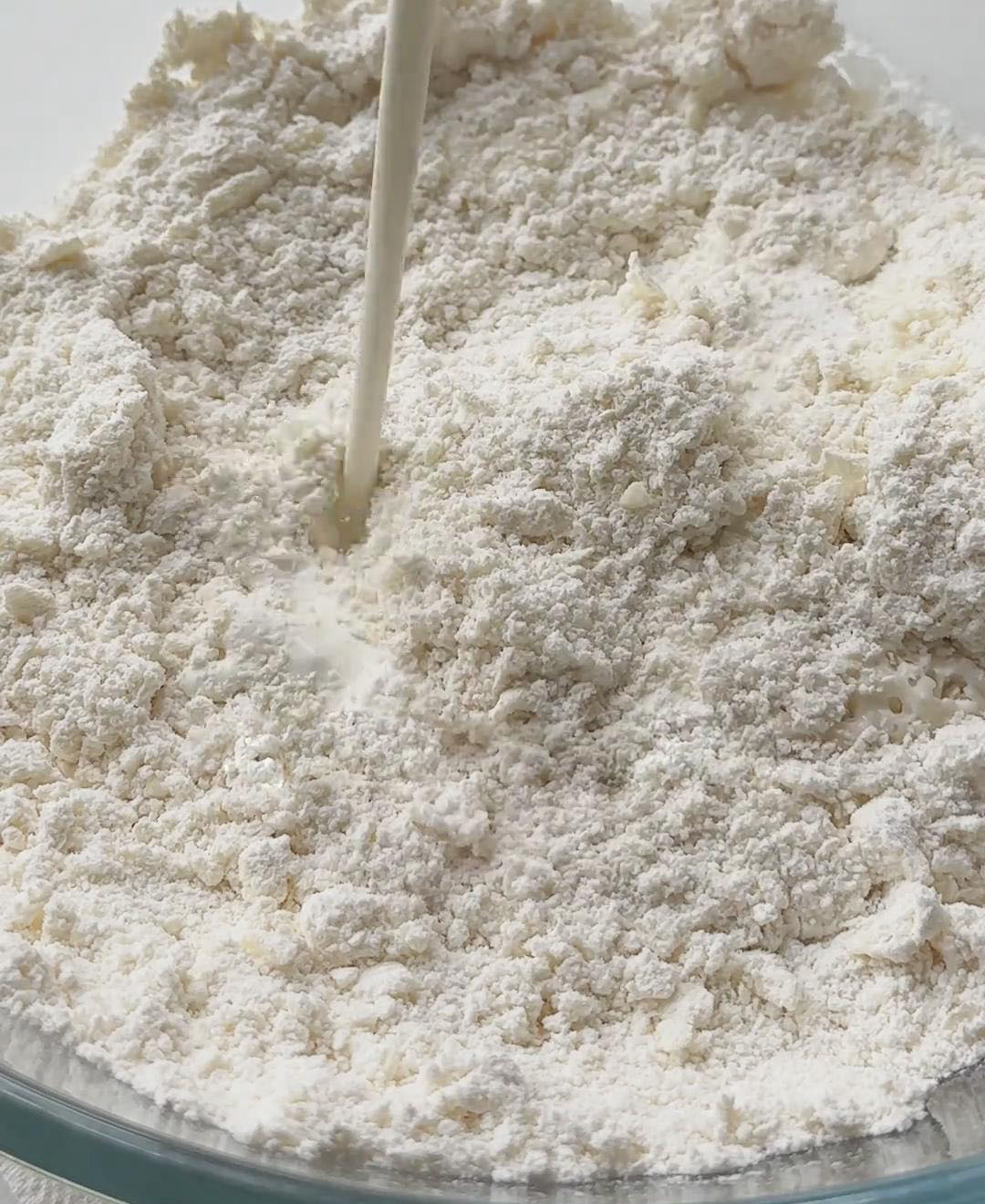
 Roll out and add peanut butter: Place the dough on a piece of plastic wrap on a flat surface and roll it out to about 0.5–1 cm thick in a square or rectangle shape. Spread a thin layer of peanut butter evenly over the dough using a spoon or spatula.
Fold and roll: Fold the peanut butter-coated dough like you’re folding a blanket, then roll it out again. Repeat the process of spreading peanut butter, folding, and rolling. I usually do this 3 times to create multiple layers. Wrap the dough in plastic wrap and freeze for half an hour.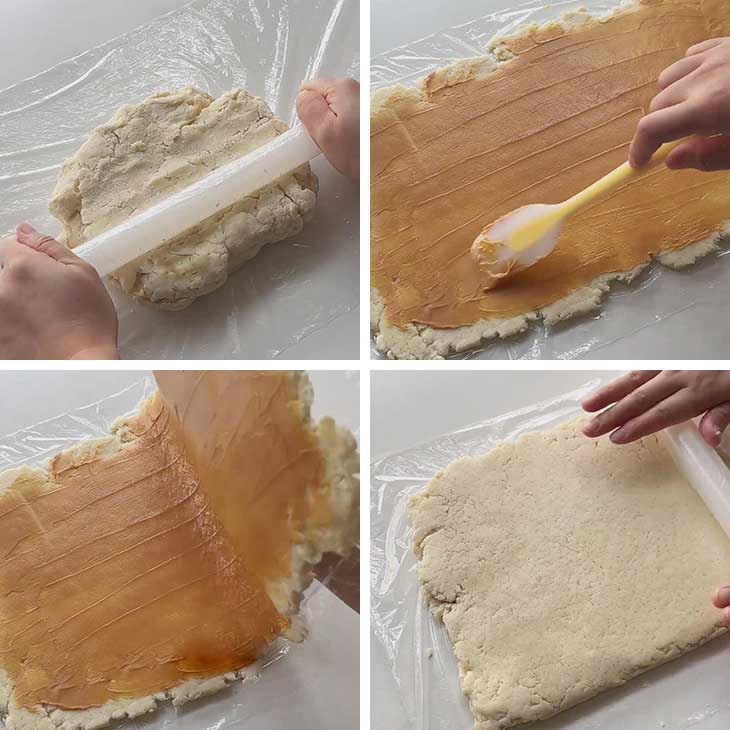

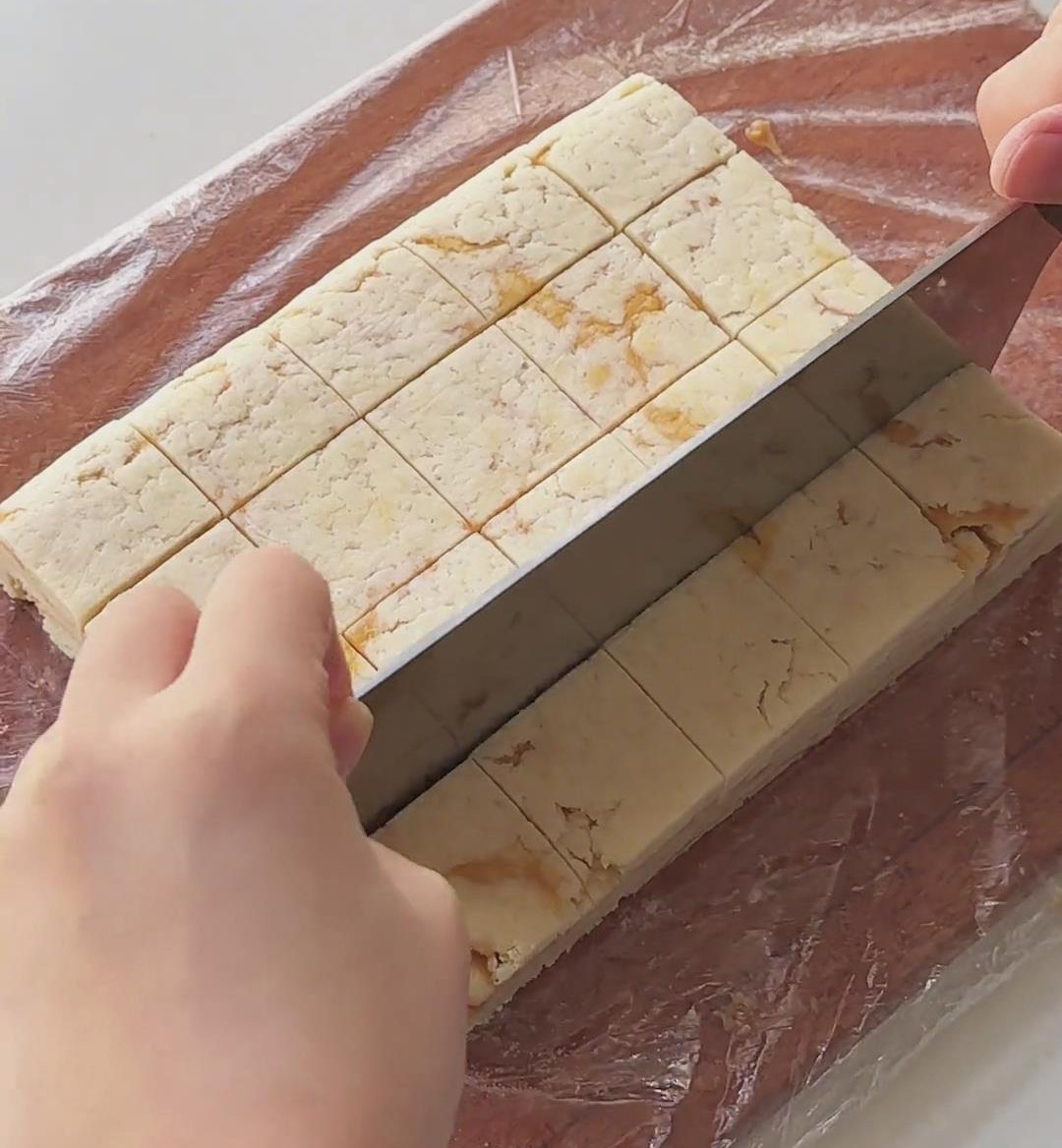
Shape and cut: Trim the edges of the dough to tidy it up, then cut it into evenly sized triangles or squares. Use a sharp knife to cut cleanly so the scones will bake evenly.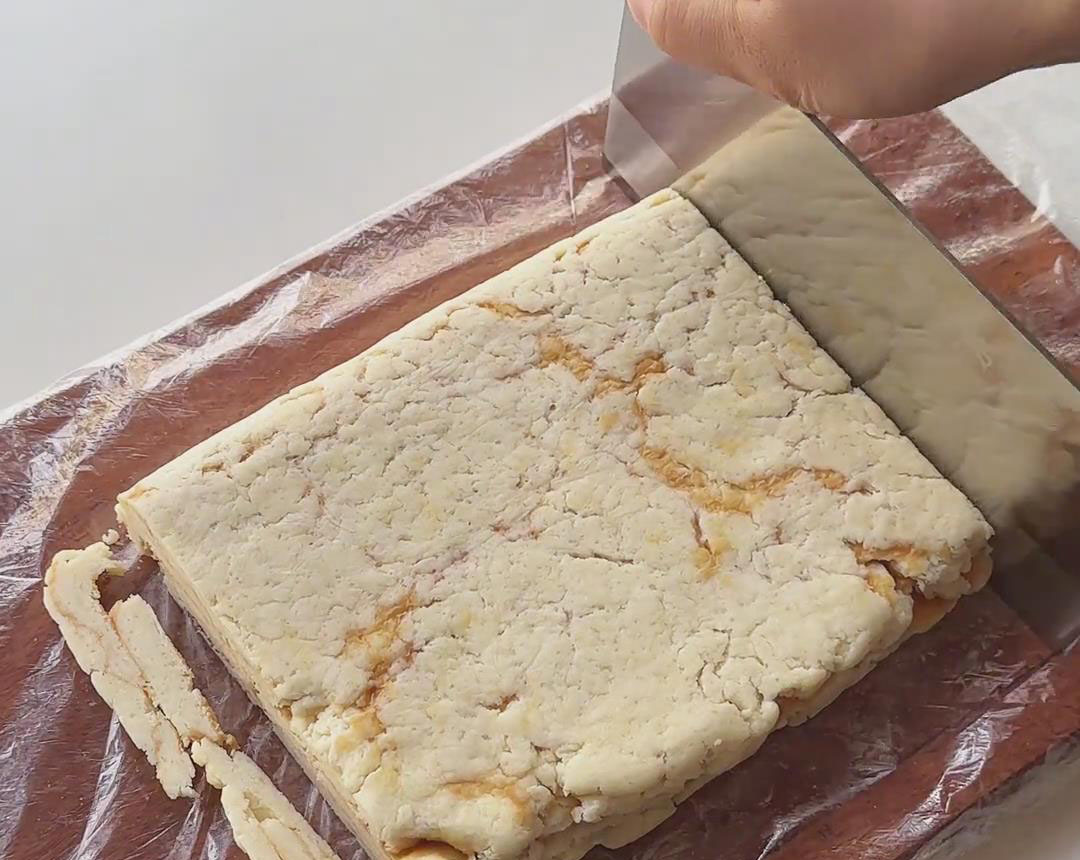
Brush with egg wash: Place the cut scones on a baking sheet. Brush the top of each scone with egg yolk wash using a pastry brush, applying it gently to avoid disturbing the shape of the scones. The egg wash will give them a beautiful golden color once baked.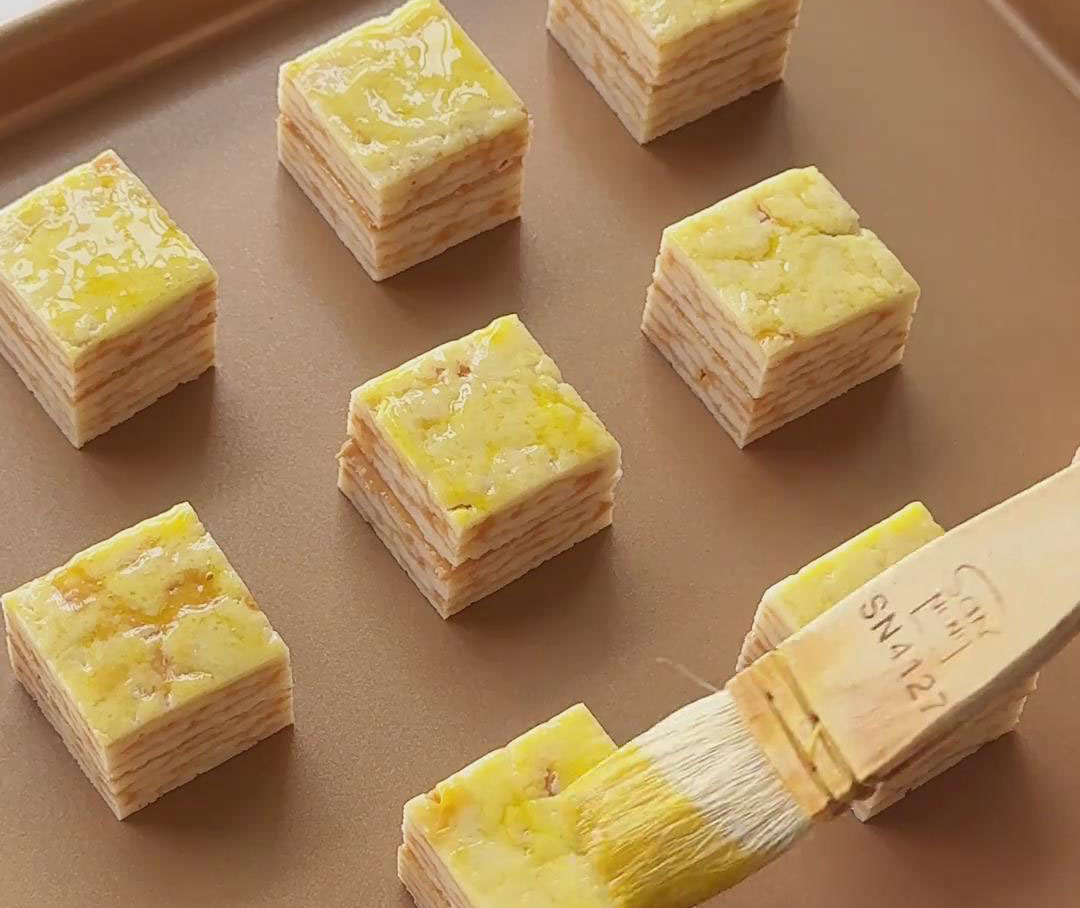
Bake: Preheat the oven to 160°C. Once preheated, place the baking sheet in the middle of the oven and bake for 20 minutes, or until the scones are golden brown on top. Keep an eye on them during the baking process to avoid overbaking.
Cool and enjoy: Once the scones are done baking, remove them from the oven and place them on a cooling rack. Allow them to cool before serving. These scones are best enjoyed warm, with a rich peanut flavor in every bite.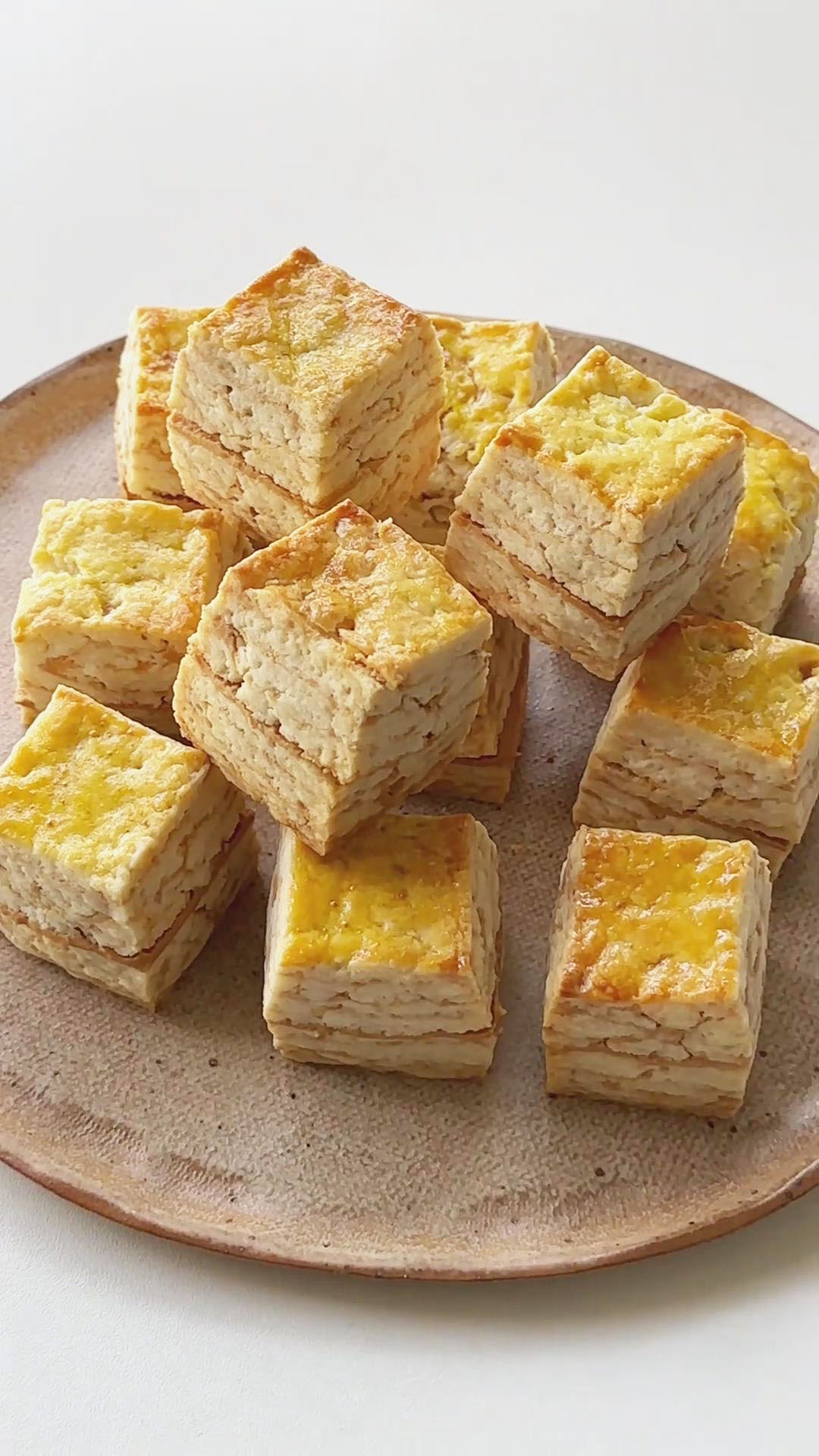
Frequently Asked Questions
Can I substitute the peanut butter with other spreads?
Yes, you can use almond butter or cashew butter for a different flavor, though it will change the texture and taste of the scones.
Can I make the dough in advance?
Absolutely! You can prepare the dough ahead of time, wrap it tightly in plastic, and store it in the fridge for up to 24 hours. Just let it come to room temperature before rolling it out.
How do I store leftovers?
These scones can be stored in an airtight container for up to 3 days. If you prefer, you can freeze them for longer storage. Simply reheat in the oven for a few minutes before serving.
The Best Peanut Butter Scones
Ingredients
For the scone dough:
- 400 g low-protein flour all-purpose flour
- 10 g baking powder
- 60 g granulated sugar
- 2 g salt
- 160 g unsalted butter
- 100 g milk
- 40 g heavy cream
For the filling and decoration:
- Peanut butter to taste: provides a rich, nutty flavor that is the signature filling for the scones.
- Egg yolk wash to taste: gives the scones a glossy golden finish when baked.
Instructions
- Mix dry ingredients: In a large bowl, combine 400g low-protein flour, 10g baking powder, 60g granulated sugar, and 2g salt. Stir well to ensure the dry ingredients are fully incorporated and free from lumps.
- Prepare the butter: Cut 160g unsalted butter into small pieces and add them to the dry ingredients. Wearing gloves, use your hands to rub the butter into the flour mixture until it resembles coarse crumbs. The butter should remain in small chunks—not melted—so the dough has layers and the scones come out flaky.
- Make the dough: Add 100g milk and 40g heavy cream to the crumbly mixture. Use a spatula to mix until the dough becomes shaggy. Then, use your hands to knead it lightly, just until it comes together. Be careful not to overwork the dough—once it forms a ball, it's done. The dough should not have any dry flour remaining.
- Roll out and add peanut butter: Place the dough on a piece of plastic wrap on a flat surface and roll it out to about 0.5–1 cm thick in a square or rectangle shape. Spread a thin layer of peanut butter evenly over the dough using a spoon or spatula.
- Fold and roll: Fold the peanut butter-coated dough like you're folding a blanket, then roll it out again. Repeat the process of spreading peanut butter, folding, and rolling. I usually do this 3 times to create multiple layers. Wrap the dough in plastic wrap and freeze for half an hour.
- Shape and cut: Trim the edges of the dough to tidy it up, then cut it into evenly sized triangles or squares. Use a sharp knife to cut cleanly so the scones will bake evenly.
- Brush with egg wash: Place the cut scones on a baking sheet. Brush the top of each scone with egg yolk wash using a pastry brush, applying it gently to avoid disturbing the shape of the scones. The egg wash will give them a beautiful golden color once baked.
- Bake: Preheat the oven to 160°C. Once preheated, place the baking sheet in the middle of the oven and bake for 20 minutes, or until the scones are golden brown on top. Keep an eye on them during the baking process to avoid overbaking.
- Cool and enjoy: Once the scones are done baking, remove them from the oven and place them on a cooling rack. Allow them to cool before serving. These scones are best enjoyed warm, with a rich peanut flavor in every bite.